
Image source: The Motley Fool.
Raven Industries (NASDAQ:RAVN) Q1 2018 Earnings Conference CallMay. 18, 2018 10:00 a.m. ET
Contents: Prepared Remarks Questions and Answers Call Participants Prepared Remarks:
Operator
Good day, ladies and gentlemen, and welcome to the Raven Industries Inc.'s first-quarter 2019 earnings conference call. [Operator instructions]. As a reminder, this conference is being recorded. I would now like to introduce your host for today's conference, Mr. Bo Larsen.�Sir, you may begin.
Bo Larsen -- Manager, Investor Relations
Good morning, everyone, and welcome to the Raven Industries fiscal 2019 first-quarter investor conference call. Today's call is being webcast live and will also be archived on the company's website for future listening. On the call today will be Dan Rykhus, Raven's president and chief executive officer, Steven Brazones, Raven's vice president and chief financial officer, and myself. Before beginning, the company would like to inform everyone that certain matters discussed during this call will include forward-looking statements as that term is defined under the Private Securities Litigation Reform Act of 1995. As such, statements reflect the company's current expectations, actual results may differ. I would now like to turn the call over to Steven Brazones, Raven's chief financial officer.
Steven Brazones -- Chief Financial Officer
Thank you, Bo. Good morning and thank you for joining us today. The fiscal year 2019 is off to a great start to Raven Industries, and we're pleased with the financials of all three operating divisions. Organic growth continues on top of the significant gains made in the prior year, driven by market share gains in our core markets.
Profitability across all three operating divisions is up versus the prior year. Adjusting for all the unusual one-time items, which Bo will elaborate in more detail later in the call, we grew pre-tax profits more than 20% year over year. In addition to a strong financial performance, we were also able to enhance our focus on our core markets by successfully divesting two noncore assets, our minority interest in Site-Specific Technology and Aerostar's client private business, with each generating a gain on sale. While we are quite pleased with our financial performance in the first quarter, we are even more pleased with the balance we continue to maintain between the short and the long term. During the first quarter, we grew sales and profits while also continuing to invest in key projects for sustained long-term growth. In applied technology, we opened our new Latin American headquarters in Brazil during the first quarter.
Momentum in this key geographic region is accelerating. We're building out our network of distributors and developing relationships with key industry participants. We are establishing a world-class sales and service center to provide consistent customer value in that region. Additionally, we continue to fully invest in R&D in applied technology to drive next-generation innovations. In engineered films, we are on schedule with the planned manufacturing capacity expansion, a project we are calling Line 15.
Line 15 will be a new state-of-the-art blown-film extrusion line, capable of producing 16 million pounds of film per year. Line 15 will further enhance our capabilities to service customers in the industrial and geomembrane markets. The division's market-share capture and demand from current customers require additional manufacturing capacity be put in place.In Aerostar, we continue to focus on our stratospheric balloon platform, as evidenced by the divestiture of our client private business in the first quarter. Interest in and sales of our radar products and services is also growing.
Investment in R&D to build upon our industry-leading capabilities to advance access to the stratosphere is leading to expanded interests with our key customer partners. The division is successfully building a market for its unique stratospheric balloon technology, and we are really excited about the future of this platform. And for all of Raven, we are investing heavily in our next-generation ERP platform. We started with engineered films and expect to go live at the end of this year. This is a key investment we are making to improve the nimbleness of the organization, the efficiency of operations, and the long-term scalability of the enterprise.
This year, we will spend approximately $4 million to implement Phase 1 of this project and launch engineered films. The project team is heavily engaged, and this gives us a lot of confidence. Each division performed well in the first quarter. We'll take a closer look at each, starting with applied technology. The division did a very good job sustaining the significant growth achieved in the prior year, especially given the lack of any meaningful improvement in commodity prices.
At the same time, division profit margin increased significantly year over year, driven primarily by lower warranty expense and favorable legal recoveries. The division continues to invest heavily in R&D efforts and the pipeline development of new products. Additionally, ATD made a significant investment to go all-in in Brazil to leverage its proven technology portfolio to a new region -- in-region sales and customer support center. The division's Latin America general manager was previously leading the global sales function for the division.
He has a robust knowledge of our precision ag technology portfolio and is a champion of customer service. Turning to engineered films, the division's strong financial performance continues. Sales growth and profit margin expansion continue as a result of market-share gains, enhancements to the division's geomembrane market capabilities, and improved energy market fundamentals. On an organic basis, excluding the impact of hurricane recovery sales, engineered films grew the top line more than 5% year over year in the first quarter. At the same time, division profit margins expanded to 22%.
The division has done a tremendous job in driving incremental margins on volume growth. Through excellent operational discipline, the division is effectively managing the price and raw material dynamics in the marketplace, integrating the CLI acquisition and continuing to innovate to capture market share. Lastly, for Aerostar, the division had fantastic results in the first quarter. Adjusting for the sale of the client private business, sales were up more than 30% year over year for the division. Both lighter than air and radar product lines achieved strong growth year over year.
Fixed cost leverage from the improved sales volumes, combined with continued expense discipline and favorable sales mix, resulted in the division doubling division profit versus the prior year. The financial benefits of focusing on the core are clearly paying off for the division. With that, I'd like to turn the call over to Bo for a more detailed review of our financials.
Bo Larsen -- Manager, Investor Relations
Thanks, Steven. On a consolidated basis, sales were $111.1 million in the first quarter, up 18.8% versus the first quarter of last year. Engineered films and Aerostar both achieved growth year over year, increasing sales 37.7% and 13.5%, respectively. Operating income for the first quarter of fiscal 2019 was $21.5 million, up $3.3 million versus the first quarter of fiscal 2018.
All three divisions achieved growth year over year and operating income during the first quarter. Included in this year's first-quarter operating income was an expense associated with the previously announced gift to South Dakota State University of $4.5 million, which is $3.7 million after tax, or $0.10 per diluted share, and Project Atlas-related expenses of $900,000, which is $700,000 after tax, or $0.02 per diluted share. Excluding these items, operating income was significantly higher than reported results. First-quarter net income was $22.1 million, or $0.61 per diluted share versus net income of $12.3 million, or $0.34 per diluted share, in last year's first quarter. In addition to the previously mentioned gift to South Dakota State University and Project Atlas-related expenses, included in this year's first quarter results is a non-operating gain on the sale of the company's ownership interest in SST of $5.8 million on a pre-tax basis, which is $4.7 million after tax, or $0.13 per diluted share.
Additionally, the 12.8 percentage point reduction in the company's effective tax rate year over year resulted in a tax benefit relative to the prior year of $3.5 million, or $0.10 per diluted share. For the remainder of the fiscal year 2019, we expect an effective tax rate of approximately 20%, excluding discrete items. Turning now to the divisions, applied technology's first quarter was $40.4 million in sales. Geographically, international sales were up 6.6% year over year and domestic sales were down 2.4% year over year. Division operating income for applied technology was $15.9 million in the first quarter of 2019.
That's an increase of $2.5 million, or 18.5%, compared to the first quarter of fiscal 2018. For engineered films, sales were $60 million. That's up $16.4 million, or 37.7%, versus the first quarter of 2018. The increase in net sales was driven by organic growth, the sale of hurricane recovery film, and acquisition of CLI. Delivery of hurricane recovery film and acquisition of CLI contributed sales of $8.9 million and $7.7 million, respectively, in this year's first quarter.
Division operating income for engineered films was $13.2 million, up $4.5 million, or 51.3%, versus the first quarter of fiscal 2018. Division operating margin increased 200 basis points year over year from 20% to 22%, driven by strong operational execution and higher sales volume. As a reminder, in the second half of this year, sales comparisons for engineered films are going to be challenged due to the nonrecurring nature of hurricane recovery film sales. In the second half of last year, the division generated $24 million in sales related to hurricane recovery film and does not expect any significant hurricane recovery film sales for the remainder of fiscal 2019. For Aerostar, first-quarter net sales were $10.9 million, up $1.3 million, or 13.5%, year over year.
The increase in sales was driven by an increase in sales volume across core product lines. Division operating income for the first quarter of fiscal 2019 doubled year over year from $1.4 million to $2.8 million. The sale of the client private business generated a small gain on sales during the first quarter of fiscal 2019. However, the change in division profit year over year was not significantly impacted by the client private business. With that, I would like to turn the call over to Dan for his comments on strategy and outlook.
Daniel A. Rykhus -- President and Chief Executive Officer
Thanks, Bo. We're off to a tremendous start to the year. What a terrific start it's been. I couldn't be more proud of the team members of Raven Industries.
They're leveraging our dimension for competition, service, quality, innovation and peak performance to drive results across the enterprise. Looking forward, we're excited about the path we're on. We have the right strategy, we have the right vision and our business model is proven. We intentionally serve a diverse group of markets with attractive long-term growth potential, and we're proactively investing in our capabilities to continue to capture opportunities and achieve long-term sustainable growth. As I step back and look at the underlying fundamentals of the company's three operating divisions, I'm very proud of the market position each division has created and the investments they are making to further strengthen their positions in the future. For applied technology, the industry continues to endure a sustained downturn in commodity grain prices and, correspondingly, farmer incomes.
At this point in the year, we don't see end market conditions improving any time soon. However, our strategy is not to wait for end-market conditions to improve, rather it's to invest in the development of new products and next-generation capabilities to further enhance our product portfolio and the value it provides to our core customers, the Ag retailers. We will also look to aggressively grow in international markets, and we will invest in the resources required to drive success, particularly in Brazil. Our pipeline of potential acquisition targets continues to grow, and we're continuously cultivating and generating new ideas. Market multiples are at the upper end of the traditional range but we still feel there are deals to be done while maintaining prudence.
All things considered, applied technology is in a strong market position and investing in the right area to generate both long-term growth and improved division profit margins. For engineered films, the division continues to capitalize on past investments and successfully drive organic growth and division profit margin expansion. The division has a strong market position in the niche markets they serve with a robust portfolio of value-added specialty films. Customers associate Raven with premium quality and performance. We will continue to invest in the division to further enhance our specialty product and service offerings through new unique manufacturing capabilities, research, and development of new products and acquisition. Regarding last year's acquisition of CLI, the integration has gone very well.
We're clearly in a stronger position today to capitalize on the growth opportunities present in the geomembrane market as a result of making this strategic acquisition. From a market perspective, we continue to see growth opportunities in each but particularly within the industrial and geomembrane markets. We have seen oil prices advance into the low $70s recently. If sustained, we would expect us to favorably impact sales growth in this market too. With respect to Aerostar, we've moved beyond optimism to confidence.
The strategic shift that we've implemented over the last two years back to our core stratospheric balloon platform and radar processing systems has heightened our focus and led to multiple successes in landing new customers. We're very proud of the significant improvement in financial results the division has achieved, and we're investing in the right areas to continue to drive long-term profitable growth in this division. The future is very bright for our stratospheric balloon platform, and the potential uses of our technology are garnering increased interest. We are the industry pioneer and market leader with capabilities to make the stratosphere affordably accessible now. In closing, the company is off a strong start to the year.
Underlying organic growth and consolidated net sales and operating incomes were approximately 5% and 20%, respectively. Each of the division is well-positioned in its markets, and we expect our positive momentum to continue. With that, we'll take your questions.
Questions and Answers:
Operator
[Operator instructions]. And our first question comes from the line of Jon Fisher from Dougherty and Company.
Jon Fisher -- Dougherty & Company -- Analyst
Very good quarter. I did have three questions that I wanted to ask. The first one on Brazil. When we look at that ATD performance same we look at SG&A spending in the quarter, were there any Brazil either revenues or build-out expenses in SG&A? And kind of how should we think about the Brazil investments contributing to revenue performance as we go through the rest of this year?
Steven Brazones -- Chief Financial Officer
Yes, Jon. This is Steven. So in the first quarter, we launched our Brazilian operations and headquarters, and obviously, we had some expenses associated with that. We've also been busy hiring sales and service professionals in Brazil.
I think we're at the end of Q1 and we're expecting to have 20 people in Brazil by the end of the fiscal year. So we had several hundred thousand dollars of expenses associated with that in the first quarter. Very little revenue impact from those resources at this point in time but the momentum is building and we expect significant improvement in the growth trends in Brazil as a result of the investment. Separately from that though, the Brazilian market's a very strong market for us, grew double digits in the first quarter, and a lot of that groundwork was laid in the prior year so we would expect sales momentum to continue to build through the year as these resources are in place and ramp up.
Jon Fisher -- Dougherty & Company -- Analyst
OK, great. And then, again, looking at SG&A, if you adjust for the South Dakota State contribution, SG&A spending was roughly $8.7 million. When you look at the revenue performance that you generated, $111 million, that's almost a record quarterly revenue performance. Can you continue to grow the business off of this current revenue run rate, spending $8.5 million to $9 million a quarter on SG&A? Or is the SG&A spending going to have to step up to get revenues to kind of that next higher level?
Daniel A. Rykhus -- President and Chief Executive Officer
Well, included in that SG&A, obviously, is you have to back out the SDSU investment, and we also had Project Atlas in there for about $1 million in the first quarter. And depending on how you're looking at the financials, R&D might be included in the SG&A as well. We've ramped up our R&D spend investment, particularly within applied technology, in the first quarter and we expect that to continue. And in terms of our underlying growth rates, we would expect, over the long term, 10% compound annual growth rate in our revenues and get some leverage through the income statement and grow our bottom line a little bit faster than that.
Jon Fisher -- Dougherty & Company -- Analyst
OK. And then the last question I had was on the ATD segment specifically. I know the year-over-year comparison was really tough, the $40 million that you did last year after the launch of the new products [Audio gap] a couple of years into that launch now. Should we think about just kind of the global macro agriculture environment, should we think about the ATD segment as more of a kind of a flat year-over-year growth? Or do you see near-term opportunities when you look out the next six to 18 months to generate positive single-digit-type growth or maybe even better out of ATD or the comps getting to the point where flattish growth is something more to be expected?
Daniel A. Rykhus -- President and Chief Executive Officer
Jon, this is Dan. Thanks for the question. And we intend to grow ATD throughout this year. Despite the market conditions being what they are and the tough comps, we've got new products in the pipeline and new products that were introduced last year that we expect are going to help us grow.
We are investing in Brazil and we do expect some growth out of Brazil this coming year, the year that we're in. So while it's still tough out there, we're not expecting and planning for a flat performance out of ATD, not at the revenue line and particularly not at the division profit line. We expect we can grow division profits this year.
Operator
[Operator instructions]. And at this time, I'm showing no further questions. I'd like to turn the call back over to Dan Rykhus for any closing remarks.
Daniel A. Rykhus -- President and Chief Executive Officer
Sure, thanks. Thanks for your questions, Jon, and thanks to all of you who dialed in. We are off to a great start. The underlying business is performing exceptionally well.
And we have strong expectations for this year and the out-years, and I just feel great about the path the company's on. We entered the year well-positioned, and we're executing on those opportunities in front of us. So we look forward to updating you again in August. Thanks.
Operator
[Operator signoff]
Duration: 22 minutes
Call Participants:
Bo Larsen -- Manager, Investor Relations
Steven Brazones -- Chief Financial Officer
Daniel A. Rykhus -- President and Chief Executive Officer
Jon Fisher -- Dougherty & Company -- Analyst
More RAVN analysis
This article is a transcript of this conference call produced for The Motley Fool. While we strive for our Foolish Best, there may be errors, omissions, or inaccuracies in this transcript. As with all our articles, The Motley Fool does not assume any responsibility for your use of this content, and we strongly encourage you to do your own research, including listening to the call yourself and reading the company's SEC filings. Please see our Terms and Conditions for additional details, including our Obligatory Capitalized Disclaimers of Liability.
10 stocks we like better than Raven IndustriesWhen investing geniuses David and Tom Gardner have a stock tip, it can pay to listen. After all, the newsletter they have run for over a decade, Motley Fool Stock Advisor, has quadrupled the market.*
David and Tom just revealed what they believe are the 10 best stocks for investors to buy right now... and Raven Industries wasn't one of them! That's right -- they think these 10 stocks are even better buys.
Click here to learn about these picks!
*Stock Advisor returns as of May 8, 2018
 SafeCoin (CURRENCY:SFE) traded 6.5% higher against the US dollar during the 1 day period ending at 7:00 AM Eastern on May 28th. In the last seven days, SafeCoin has traded up 19% against the US dollar. SafeCoin has a market capitalization of $0.00 and approximately $0.00 worth of SafeCoin was traded on exchanges in the last day. One SafeCoin coin can now be purchased for $0.0001 or 0.00000001 BTC on popular cryptocurrency exchanges.

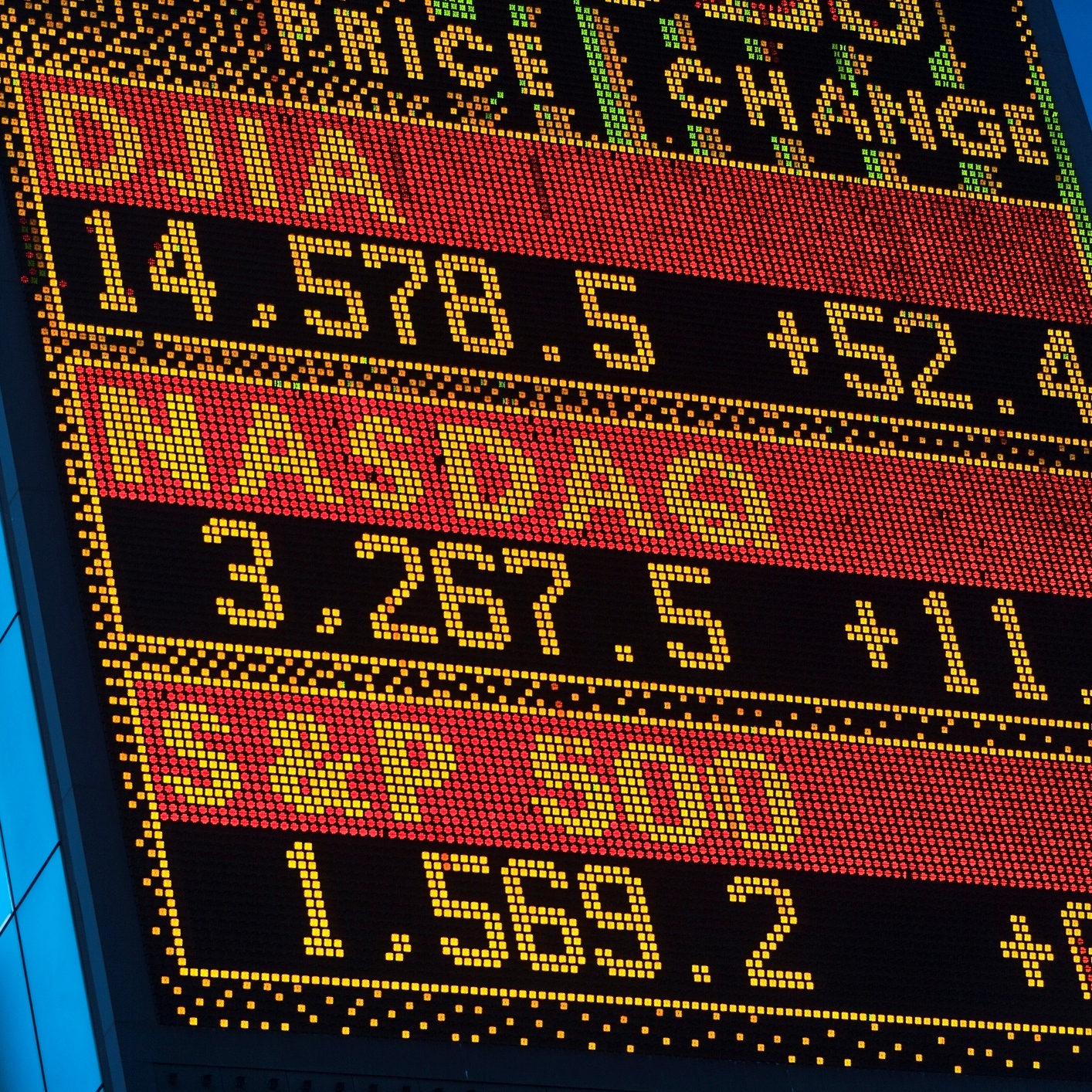 Source: ThinkstockMay 21, 2018: The S&P 500 closed up 0.7% at 2,733.03. The DJIA closed up 1.2% at 25,013.36. Separately, the Nasdaq was up 0.5% at 7,394.04.